 Insider · Tech Breaking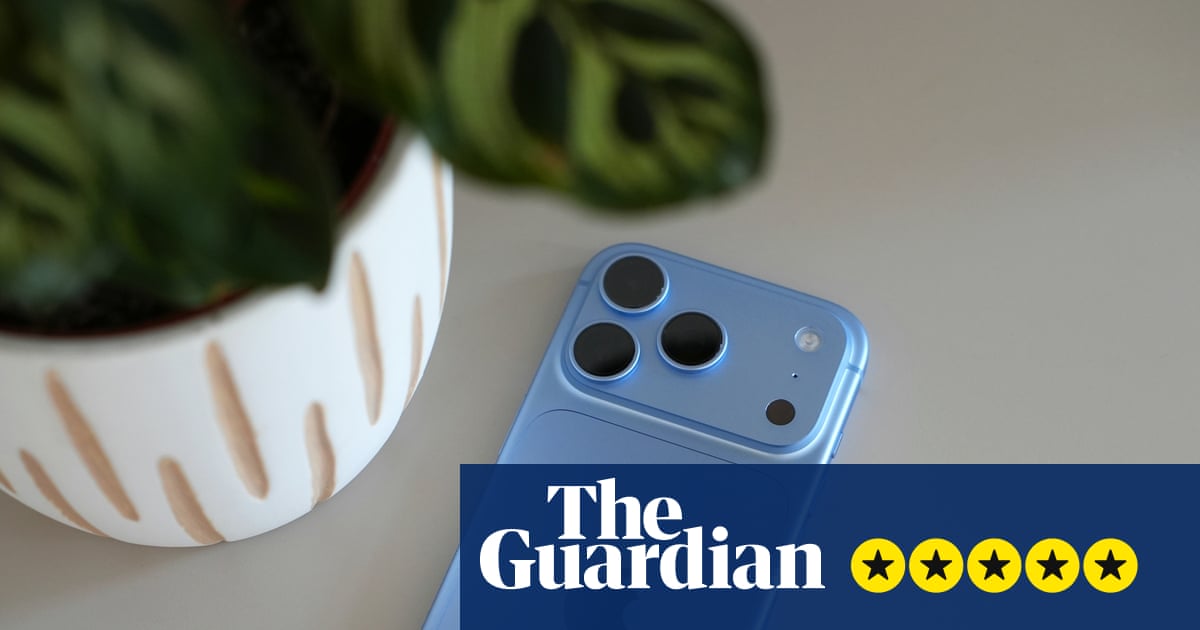
Apple’s smaller Pro iPhone gets the best kind of spec bump for 2026: longer battery life, faster chips and a fancy new variable aperture for the main camera. The iPhone 18 Pro is one of a pair of slab phones launched alongside Apple’s first folding phone , the iPhone Duo, and is the cheapest of the new phones, with a regular iPhone 18 yet to be announced. It isn’t exactly low cost, priced from £1,199 (€1,449/$1,199/A$2,099), with a £100 or equivalent rise over previous models courtesy of RAMageddon .
Having fully revamped the design of the body for the iPhone 17 Pro , the new model is a modest refinement. It is 7g heavier and the back glass now matches the colour of the aluminium body, which is available in a handful of new shades. The dynamic island at the top of the screen can now show three live activities at once, such as music playback, a timer and maps navigation.
Photograph: Samuel Gibbs/The Guardian Apple has shrunk the amount of the screen taken up by the Face ID camera, allowing the dynamic island to show three continuing tasks, up from two on previous devices. It also now shows the 3/4/5G indicator next to the signal level when playing music, which is a most appreciated feature for public transport commuters sorely missed on previous models. Otherwise, the 6.3in screen is one of the very best on a phone: super bright, crisp and smooth, while being big enough without making the phone enormous.
An anti-glare coating makes it much easier to see outside, too. Specifications Screen: 6.3in Super Retina XDR (120Hz OLED) (460ppi) Processor: Apple A20 Pro RAM: 12GB Storage: 256GB, 512GB or 1TB Operating system: iOS 27 Camera: 48MP + 48MP UW + 48MP 4x, 18MP front-facing Connectivity: 5G, wifi 7, NFC, Bluetooth 6, Thread, USB-C, Satellite, UWB and GNSS Water resistance: IP68 (6 metres for 30 mins) Dimensions: 150 x 71.9 x 8.75mm Weight: 211g Faster chip and longer battery life A full charge takes 59 minutes, hitting 80% in 33 minutes, using a 60W or greater USB-C adaptor. Photograph: Samuel Gibbs/The Guardian The 18 Pro has Apple’s new A20 Pro chip, which is about 27% faster than the A19 Pro in last year’s model, with about 45% faster graphics performance.
Since the A19 Pro was no slouch, that’s quite the leap and puts it miles ahead of the competition, ready to handle anything. The phone has a redesigned cooling system for longer peak performance, too, which is especially useful for running games on top settings. The battery lasts a solid six hours longer than the iPhone 17 Pro, managing to stretch to about two days between charges with more than six hours of active screen use across apps, browsing, messaging and photos.
Even with the heaviest of use while out and about, the 18 Pro managed to end the day with 40% left in the tank. Most people will only need to charge it every other day. iOS 27 with new Siri The new iOS 27 is familiar but faster and debuts Apple’s attempt to catch up to the competition on AI. Photograph: Samuel Gibbs/The Guardian The 18 Pro ships running iOS 27 , which was released for the rest of the iPhone line on 14 September.
It refines the relatively controversial Liquid Glass redesign from last year and speeds up the system, including app launches. But the big new addition is Apple’s revamped Siri, backed by Google’s AI technologies. Siri AI, as the new system is called , is significantly more capable of understanding and answering questions than previous iterations.
It is a chatbot like most other AI assistants, but it is less chatty and sycophantic than others, being more likely to just get the job done. As well as a choice of voices, there are sliders to control how fast it talks and how expressive its responses are. It has its own app where you can review previous interactions, but it is accessible anywhere on the phone via the side button, is built into Spotlight search and can see what’s on your screen, including when using the camera.
It can also offer suggestions, such as adding an event to your calendar from the messages or mail apps, and attempts to display relevant information from your emails in the phone app when you call a business. But Siri can only do so if you use Apple’s apps, so if you use WhatsApp for texting and Gmail for your email, none of it works. Sustainability The battery will last more than 1,000 full-charge cycles with at least 80% of its original capacity and can be replaced for £119 .
Out-of-warranty screen repairs cost £349 . The specialists iFixit awarded the phone a seven out of 10 for repairability. It contains more than 40% recycled material.
The company breaks down the phone’s environmental impact in its report. Apple offers trade-in and free recycling schemes, including for non-Apple products. Camera The camera app has new customisable shortcuts to your most used tools and settings, as well as aperture, shutter speed and exposure controls.
Photograph: Samuel Gibbs/The Guardian The 18 Pro has a similar camera system to last year’s 17 Pro with one big addition, a variable aperture for the main camera. skip past newsletter promotion after newsletter promotion That means it has a very good 18MP centre stage selfie camera on the front and three 48MP cameras on the rear: main, 0.5x ultrawide and 4x telephoto. The ultrawide is one of the best on a phone, handy for landscapes and group shots. The 4x telephoto is very good too, full of detail and manages lower light settings well.
It shoots excellent photos with a crop zoom to reach 8x before digital zoom is required, which is a little behind rivals with 5x/10x telephoto zooms. The variable aperture on the main camera can be left on automatic or controlled manually. It allows the camera to open wider than previous models for better low light performance, speeding up night mode shots and reducing unwanted motion blur.
But it also enables a number of creative uses, such as making starbursts by narrowing the aperture when shooting lights, which is very fun, or controlling the depth of field in your photo. However, because the iPhone’s camera is tiny compared with an APS-C or full-frame camera, the difference in depth of field – where the foreground and background of the image are either in focus or blown out for a nice bokeh effect – is pretty minor. When shooting something up close, manually closing the aperture to f / 4.0 can bring things in the foreground or background into focus, but otherwise the difference for most shots is small.
You can see the six aperture blades open and close on the bottom left camera lens using a torch. Photograph: Samuel Gibbs/The Guardian The 18 Pro’s camera has a number of other useful upgrades. My favourite is AI-powered focus tracking that keeps a subject in focus as it moves about or into and out of the frame, which has been one of the best features of a Pixel camera for years and is extremely handy for fast-moving children or pets.
Apple has also added texture and grain control to its Photographic Styles feature to customise how the camera shoots photos beyond what was introduced with the iPhone 16 Pro , including film simulation. Finally, the new Apple Reference Image feature can sign an image for authenticity, on a per pixel level directly on the sensor, to help later prove a shot is not AI-generated, similar to a digital negative. The camera shoots some of the very best video on a phone, too.
New for this year is the ability to convert a regular video to a cinematic one after the fact , a bit like the excellent automatic portrait mode for photos. Price The iPhone 18 Pro costs from £1,199 (€1,449/ $1,199 / A$2,099 ). For comparison, the iPhone 17 costs £899 , the iPhone Air costs £1,099 , the iPhone 18 Pro Max costs £1,299 , the Google Pixel 11 Pro costs £1,079 and the Samsung Galaxy S26 Ultra costs £1,359 .
Verdict The iPhone 18 Pro is an iterative upgrade on an already great device from last year. Inside, it has some quite big changes, but their impact is fairly minor on the whole experience. The new A20 Pro chip is super fast, but you can’t really notice the difference day to day, as previous iPhone chips have already been very quick.
The extended battery life is great, but most people will still have to charge it every other day. The smaller camera cutout in the dynamic island now shows three continuing activities instead of two. Even the variable aperture in the main camera makes only a small difference to image quality unless you’re really trying to get creative.
The screen is fantastic and big enough. The aluminium body feels great to hold. The cameras are some of the best on a phone and even Siri is better now.
All of these things add up. The 18 Pro is without doubt the best iPhone ever made and at this size is one of the very best smaller phones available. It’s just not a transformative change unless you’re upgrading from a much older model and it now costs even more thanks to RAMageddon.
Pros: relatively compact, great screen, better dynamic island, longer battery life, great cameras, variable aperture, USB-C, top performance, long software support, Face ID, better AI. Cons: small upgrade on last year, expensive, heavier than previous model, AI tools still lag behind top competitors.
Source: The Guardian